Introduction — why this connection matters
Have you ever walked a cranberry bog and noticed the fine silk threads glinting in the sun? Those silken lines belong to a group of unsung allies: bog spiders. For growers and ecologists alike, the phrase bog spiders cranberries quickly points to a fascinating ecological relationship — spiders are common in wetland crop systems, and their role can be surprisingly influential. In this article I’ll unpack how spiders fit into cranberry bog ecosystems, why they matter for pest control and yield, and how growers can encourage the “good” spiders while minimizing potential downsides. Think of spiders as tiny, eight-legged custodians of the bog — sometimes invisible, often effective.
Cranberry bog ecosystems: a quick primer
Cranberry bogs are unique agroecosystems: low-lying, often flooded or saturated soils, with low woody plant cover and dense mats of cranberry vines. This physical template creates microhabitats that support a rich invertebrate community — from herbivorous leaf-chewers to tiny pollinators, predators, parasitoids, and decomposers. The mix of standing water, sedge margins, and vegetative complexity provides microclimates and refuges where spiders can thrive.
Bog hydrology and plant structure
Cranberries grow on prostrate vines; weeds, mosses, and sedges often rise above them. Periodic flooding (for harvest or frost protection) influences which arthropods persist. For spiders, the interplay of wet ground and elevated vegetation creates both hunting grounds and sites to spin webs or hide.
Typical invertebrate community
A healthy bog hosts aphids, leafhoppers, moth and beetle larvae, adult beetles, flies, and day-flying pollinators, plus predatory insects like assassin bugs and spiders. Many of these are potential cranberry pests; others are benign or beneficial. Spiders interact across this web, impacting population dynamics up and down the chain.
Who are “bog spiders”? — identity and life habits
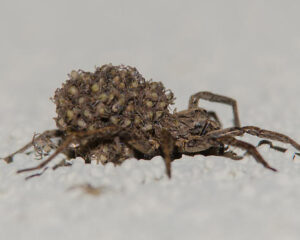
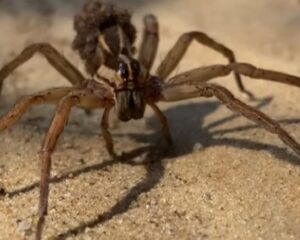
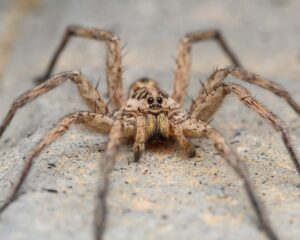
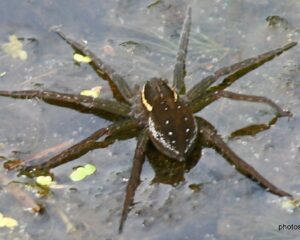
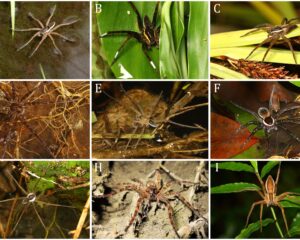
“Bog spiders” isn’t a taxonomic group, but a practical way to refer to spiders common in wetland habitats and cranberry bogs. These include both web-building species (which catch flying or jumping insects) and active hunters (which chase or ambush prey on the vegetation and ground). Their life histories — egg sac placement, overwintering strategies, and timing of maturation — determine when and how strongly they influence insect populations.
Web-builders vs. hunting spiders
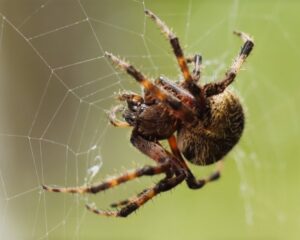
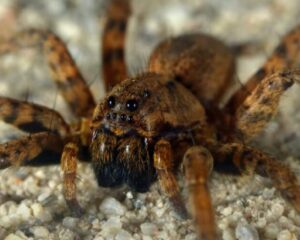
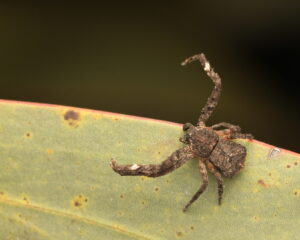
Web-builders (orb-weavers, sheet-web spiders) create structures that intercept flying or jumping pests. Hunting spiders (wolf spiders, jumping spiders, crab spiders) actively search or ambush prey on the surface or vegetation. Each strategy targets different prey types and operates at different times of day, creating complementary control.
Common behaviors in wetland habitats
In bogs you’ll find spiders using sedge stems for web anchors, hiding under leaf litter, or ambushing insects on low flowers. Some species balloon — catching wind currents as spiderlings — to colonize new patches after disturbance. These behaviors make spiders resilient colonizers in dynamic bog environments.
Trophic role: spiders as generalist predators
Spiders are classic generalist predators: they don’t hunt one insect species exclusively. Instead, they feed opportunistically on a range of arthropods. This generalism is a double-edged sword for growers — it means spiders can suppress many potential cranberry pests but also occasionally eat neutral or beneficial insects. Still, when pest pressure is the problem, generalist predation often tilts the balance toward healthier crops.
Prey types in cranberry bogs
Common prey includes small moth larvae, aphids, leafhoppers, thrips, and flies — many of which, in high numbers, can damage leaves, flowers, or fruit. By reducing the abundance or feeding rates of these herbivores, spiders help keep plant stress and direct crop damage down.
Direct pest suppression vs. incidental predation
The most obvious benefit is direct predation: fewer herbivores means fewer berries damaged. Indirectly, predators can reduce pest reproduction and feeding behavior (fear effects). Even when spiders consume neutral insects, they contribute to overall arthropod turnover and energy flow that supports a balanced ecosystem.
How spider predation can improve cranberry yields
You don’t need every herbivore eliminated to see a benefit: moderate reductions in pest density during critical growth windows (flowering and early fruit set) can translate into better pollination outcomes and larger, healthier berries. Spiders can nudge pest populations below damage thresholds, reducing the need for broad-spectrum interventions.
Reducing herbivore pressure
Because spiders are active both at night and day (depending on species), they can catch pests that evade other predators. Fewer chewing larvae and sap-sucking aphids means less leaf and flower damage, and therefore more energy available for fruit development. Over a season, this adds up.
Indirect benefits (disease, stress reduction)
Pests often vector disease or create wounds that invite fungal infection. By lowering pest loads, spiders can indirectly reduce disease incidence and plant stress — which in turn supports better fruit set and ripening. Think of spiders as frontline defenders that reduce both direct and cascading threats.
Trade-offs: when spiders can hurt as well as help
It’s not all one-way positive. Spiders sometimes capture pollinators or other beneficial predators. In small, closed systems the relative balance matters: if spider abundance is extremely high and coincides with peak pollinator activity, there’s a theoretical risk of reduced pollination. In practice, most bogs maintain a dynamic balance where the net effect of spiders is beneficial — but awareness and monitoring are key.
Predation on pollinators — real risk?
Some ambush spiders sit on flowers and catch visiting bees or flies. If growers rely on managed pollinators (e.g., placed hives) and spider densities are very high on flowering stems, there could be local effects. However, most wild and managed pollinators forage widely, and the spatial mosaic of the bog usually prevents catastrophic pollination loss.
Balancing ecosystem services
The goal for sustainable growers is to enhance those ecosystem services (pest suppression, decomposition, pollination) while minimizing disservices (pollinator predation). That balance comes from habitat management and thoughtful pesticide use.
Seasonality & life cycles: timing matters
Spider populations wax and wane through the season. Many species have annual cycles: eggs overwinter, spiderlings hatch in spring, juveniles build up in early summer, and adults peak in late summer. Cranberry phenology — flowering, fruit set, ripening — also occurs on a seasonal timetable. When spider peaks align with pest outbreaks, control is most effective. When they don’t, complementary measures may be needed.
Spider population dynamics through the growing season
Early-season ground-dwelling predators help control soil-dwelling pests; later, web-builders intercept flying pests and adult herbivores. Understanding these dynamics helps growers know when spider-mediated control is likely to be strongest.
Synchrony with cranberry phenology
If spider abundance is low during bloom, predation on pollinators could be minimal, and their later-season pest suppression may reduce fruit injury. Managers can manipulate habitat to try and time predator peaks more favorably.
Management practices to support beneficial spiders
Want more spiders doing the heavy lifting? There are practical, low-cost habitat tweaks that encourage diverse spider communities and their pest-regulating services.
Habitat enhancements (refugia, vegetation structure)
Leaving uncut vegetation strips, maintaining sedge and grass margins, and creating microrefugia (woody debris, tussocks) gives spiders places to overwinter and hide from disturbance. Structural diversity — a mix of low and taller plants — supports both web-builders and hunting spiders. Small wetland islands and undisturbed edges are especially valuable.
Pesticide strategies and integrated pest management (IPM)
Broad-spectrum insecticides can knock back spiders along with pests, undermining natural control. IPM practices — threshold-based spraying, spot treatments, and selective products — reduce non-target impacts. Monitoring pest levels and applying treatments only when needed keeps spider populations intact and making a difference.
Timing sprays and selective products
If chemical control is necessary, timing applications when spiders are least active (e.g., avoiding periods right after spiderling emergence) and choosing products with lower persistence and narrower spectra helps preserve predators. Also, consider biopesticides and microbial controls with lower non-target risks.
Monitoring spiders and measuring impact
Before changing management it helps to know what’s already there. Simple monitoring gives growers data to make smarter decisions.
Simple field methods (sweep nets, visual surveys, pitfall traps)
Sweep-netting vegetation, timed visual transects, and pitfall traps for ground-active spiders are low-tech ways to estimate spider abundance and diversity. Repeating surveys through the season reveals trends and informs interventions.
Advanced tools (molecular gut analysis, exclusion experiments)
Researchers use gut-content PCR to see what spiders have eaten, and exclusion cages to compare pest damage with and without spider access. These methods provide strong evidence for causation — helpful for on-farm trials or extension projects.
Case examples and lessons from agricultural ecology
Across many cropping systems, from vegetables to orchards, conserving predator communities reduces pest outbreaks and pesticide dependence. Cranberry bogs are no exception: a structurally complex bog with minimal non-selective spraying tends to show more consistent natural control. Think of successful bog management as designing a habitat that prizes allies — spiders included — rather than flattening the entire arthropod community.
Broader implications for conservation & sustainable farming
Encouraging spiders in bog systems fits into larger sustainability goals: less chemical runoff into waterways, fewer non-target kills, and a healthier web of life around farms. For ecologists, bogs are living laboratories showing how small predators scale their effects to the landscape. For growers, they’re cost-effective partners in crop protection.
Conclusion
Bog spiders quietly stitch together many of the ecological threads that influence cranberry health. By preying on herbivores, modulating disease vectors, and contributing to a dynamic, resilient invertebrate community, spiders are an important — though often overlooked — component of cranberry agroecosystems. Encouraging a diverse spider fauna through habitat complexity and judicious pest management supports natural pest suppression, reduces reliance on chemicals, and helps secure better harvests. If you manage bogs, think of spiders not as pests but as part of a living pest-control team worth conserving.
FAQs
Q1: Do bog spiders actually eat cranberry pests?
A: Yes — bog spiders are generalist predators and commonly consume small herbivorous insects that damage cranberries, such as leaf-feeding larvae, aphid-like insects, and small moths. Their presence can reduce pest numbers and feeding damage, especially when spider populations are healthy.
Q2: Will spiders reduce pollination by eating bees?
A: In most bog systems the net effect of spiders is positive. While some ambush spiders may capture individual pollinators, pollination tends to be spatially distributed, and most pollinators forage across many plants. Proper habitat design and monitoring help minimize any local pollinator impacts.
Q3: How can growers encourage beneficial spiders without harming crops?
A: Keep field margins and sedge strips, reduce broad-spectrum pesticide use, use threshold-based spraying, and leave refugia such as tussocks and debris. These steps boost predator diversity without compromising crop health.
Q4: How do I monitor if spiders are helping my bog?
A: Use sweep nets, timed visual counts, and pitfall traps to estimate spider abundance. Pair these with simple records of pest damage and yield; over time you may see correlations where higher predator abundance associates with lower damage.
Q5: Are there risks to relying on spiders for pest control?
A: Spiders are one tool in a toolbox. They work best as part of integrated pest management. Over-reliance without monitoring can fail if particular pest outbreaks require targeted action; but conserving spiders generally reduces the frequency and intensity of chemical interventions.
- Discover how bog spiders help protect cranberry crops naturally while balancing wetland ecosystems. 🌿🕷️
- Learn the fascinating link between bog spiders and cranberries—where science meets sustainable farming!