Introduction: Why this topic matters to biologists and ecologists
If you’ve spent time in wetland agriculture or coastal peatlands, you’ve probably felt a little tickle on your boot or brushed a sleeve and found a spider hitching a ride. The phrase cranberry bog spiders on person conjures images of tiny invaders crawling over skin — but how much of that is myth and how much is real? This article unpacks the ecology, behavior, and real risks (if any) of spiders found in cranberry bogs, and gives practical safety tips for field researchers, farm workers, and anyone who studies or manages wetland habitats.
Why cranberry bogs attract spiders
Cranberry bogs are complex micro-landscapes — think of them as apartment complexes for arthropods. Their structure provides shelter, humidity, and a buffet of prey.
Microhabitats in the bog (vegetation, water margins, litter)
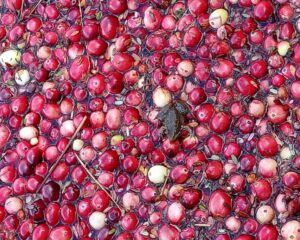
Bog edges, dense cranberry vines, and the interface between open water and plants create shaded, humid refuges where spiders hide, hunt, and lay eggs. These microhabitats offer places to anchor webs, ambush prey, and avoid desiccation.
Prey availability and seasonal peaks
Insects — midges, moths, flies, and small beetles — flourish in and around bogs, particularly during warm months. More prey = more predators. For spiders, a cranberry bog is like an ever-changing food court.
Common spider types you’ll meet in cranberry bogs
Fishing spiders (Dolomedes and relatives)
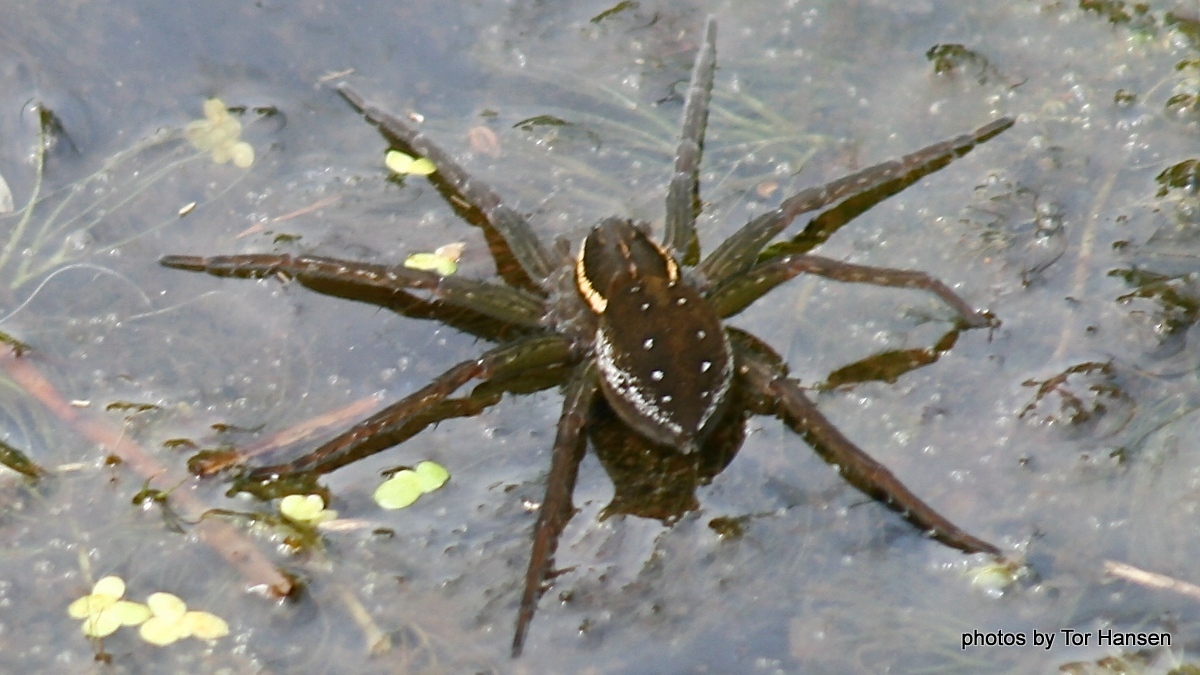
Fishing spiders are large, semi-aquatic hunters often seen near the water’s edge. They can run over water and ambush aquatic or semi-aquatic prey. Their size can make them look alarming, but they are generally shy of humans.
Wolf spiders and ground hunters
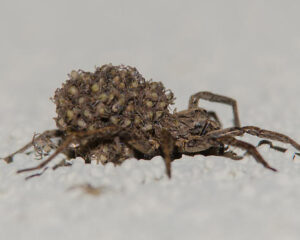
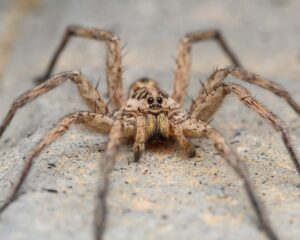
Wolf spiders (Lycosidae) are fast, active hunters that live on the ground. They don’t build capture webs; instead they hunt in leaf litter and vegetation. Their robust bodies and quick movements are what most people recognize as “big spiders” in fields and bogs.
Web-builders and nursery web spiders
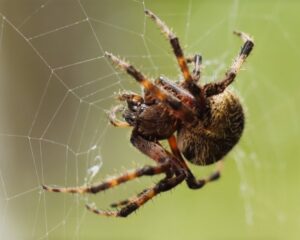
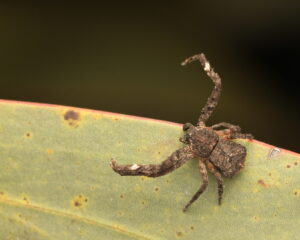
Some orb-weavers and nursery web spiders use shrubs and tall stems to anchor webs. These species play a crucial role catching flying insects that other predators might miss.
Identifying bog spiders: key features
Size, coloration, and leg posture
Fishing spiders can span several centimeters across with long legs; wolf spiders are stockier. Coloration typically ranges from brown to gray with patterns that camouflage against plant stems and leaf litter.
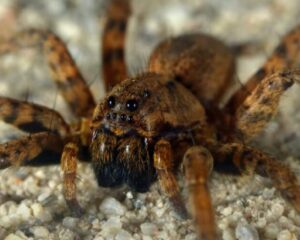
Eye patterns and other diagnostic features
If you’re into ID, eye arrangement and leg spination are useful diagnostic tools. But for field safety, size, behavior (running vs. webbing), and habitat are usually enough.
Behavior: will a spider end up on a person?
Modes of movement: walking, dropping, and ballooning
Spiders move by walking, sometimes drop or “parachute” on silk, and juveniles may balloon on threads to disperse. None of these behaviors are directed at humans; they’re survival tactics.
Why spiders might climb onto boots, clothing, or hands
A spider might end up on a person by accidental contact: stepping into vegetation, reaching under leaves, or leaning against a stem. Imagine you’re a tree and a gust of wind carries you past a spider’s web — it’s incidental, not intentional.
Myths vs. facts about cranberry bog spiders and people
Myth: they aggressively attack humans
Many myths paint bog spiders as aggressive attackers. In reality, spiders lack the behavioral drive to “attack” large animals. Most species retreat or freeze when confronted with a big, warm, noisy mammal.
Fact: bites are rare and usually defensive
When bites do occur, they’re defensive — a spider trapped against skin or squeezed in clothing might bite to escape. For most bog-dwelling species, venom is adapted for small invertebrate prey and causes minimal effects in humans.
Medical significance: what a bite looks like and how to respond
Typical symptoms and allergic reactions
Most harmless spider bites cause minor redness, swelling, and a pain comparable to a bee sting. Allergic reactions are rare but possible — hives, swelling beyond the bite site, or difficulty breathing require immediate medical care.
First aid and when to seek medical attention
- Clean the area with soap and water.
- Apply a cold pack to reduce swelling.
- Monitor for spreading redness, fever, or systemic symptoms.
Seek medical attention if you experience severe pain, escalating swelling, signs of infection, or any allergic reaction.
Safety tips for field biologists, workers, and ecologists
PPE and clothing choices
Wearing long sleeves, gloves, and high boots is the simplest, most effective protection. Tuck pant legs into boots, and choose lighter-colored clothing to make spiders easier to spot.
Work practices to reduce unwanted encounters
- Shake out gloves, clothing, and boots before putting them on.
- Use a stick or probe to part dense vegetation before placing your hands inside.
- Move slowly when sampling; sudden disturbance can startle spiders.
Harvest-time and research-sampling tips
During harvest or dense-field work, have a “shake station” for clothing and carry a small brush to nudge spiders off clothing. Communicate with crew about spider hotspots (e.g., certain field edges).
What to do if a spider lands on you
Stay calm. Quick movements may startle the spider into a defensive bite (rare). Gently brush it away with your hand or a stick. If it’s on clothing, step aside and remove the garment or shake it out away from your face.
Ecological role: why these spiders are allies in the bog
Pest control and food-web services
Spiders are voracious predators of insects, many of which are pests of cranberry and other crops. Think of them as silent farmhands keeping pest outbreaks in check — low cost, high benefit.
Biodiversity and monitoring value
The presence and diversity of spiders can indicate habitat health. Shifts in spider communities may warn ecologists of changing water regimes, pesticide impacts, or invasive species.
Non-toxic management strategies for cranberry operations
Habitat management and traps
Promoting edge habitat complexity and avoiding broad-spectrum insecticides helps keep spider populations healthy. If control is needed, use targeted, low-impact measures and monitor effects on non-target predators.
Research gaps and questions for future study
How do spider populations respond to common cranberry management practices such as flooding or selective insecticide use? What is the role of spiders in suppressing economically important pests in commercial bogs? These are fertile questions for ecologists and applied entomologists.
Practical takeaways
- Encounters with cranberry bog spiders on person are usually accidental and rarely dangerous.
- Use common-sense PPE and slow, deliberate field techniques to minimize unwanted contacts.
- Value spiders for their role in pest control and ecosystem health — they’re allies, not enemies.
Conclusion
Cranberry bog spiders are an integral part of wetland ecosystems: little predators that keep insect populations balanced. While an unexpected spider on your sleeve can be startling, bites are uncommon and typically minor. For biologists and field workers, smart clothing choices and cautious handling of vegetation reduce the chances of an uncomfortable encounter. Rather than fearing these arachnid neighbors, we should study and conserve them — they’re nature’s quiet custodians of the bog.
FAQs
Q1: Are cranberry bog spiders venomous to humans?
A1: Most cranberry bog spiders have venom suited for small invertebrates. Human effects are usually mild (local pain, redness). Serious reactions are rare but possible in allergic individuals.
Q2: If a spider lands on me in a bog, what should I do first?
A2: Stay calm and gently brush it away or use a stick to coax it off. Avoid crushing it against your skin, which is when defensive bites are most likely.
Q3: Can spiders spread diseases in cranberry bogs?
A3: No — spiders are predators, not vectors for human diseases. They do not transmit pathogens like mosquitoes or ticks do.
Q4: How can cranberry growers encourage beneficial spider populations?
A4: Minimize broad-spectrum insecticide use, preserve vegetative margins, and maintain habitat heterogeneity. These practices bolster spider diversity and pest suppression.
Q5: Should I always seek medical care after a spider bite?
A5: Not always. For minor pain and local swelling, first aid (cleaning and cold pack) is usually sufficient. Seek prompt care if symptoms worsen, spread, or if you have breathing difficulties or significant swelling.
- Discover the truth about cranberry bog spiders on people — myths, facts, and safety tips every biologist should know.
- Learn how to stay safe in the field while appreciating these vital predators of wetland ecosystems.