Introduction: An Unexpected Partnership
At first glance, a fast-running, shaggy wolf spider and a neat row of glossy red cranberries don’t seem like natural partners. Yet across North America (and in cranberry-growing regions elsewhere), spiders — particularly ground-hunting species commonly grouped as “wolf spiders” — are part of the bog mosaic. In the tug-of-war between crop protection and ecological balance, these arachnids can act as quiet allies, hunting pests and helping lower pesticide pressure. If you’re a biologist, ecologist, or grower curious about arthropod-mediated ecosystem services, read on: this article unpacks the biology, the evidence, and the practical implications.
The Players — Wolf Spiders (Family Lycosidae)
Taxonomy and Global Diversity
Wolf spiders belong to the family Lycosidae, a cosmopolitan group with thousands of described species worldwide. They are a diverse, successful radiation of ground-hunting spiders adapted to open ground and edge habitats. Their ubiquity — from grasslands to woodlands to agricultural margins — makes them an interesting subject when we study agroecosystems like cranberry bogs.
Key Characteristics: Hunting Style, Eyesight, and Maternal Care
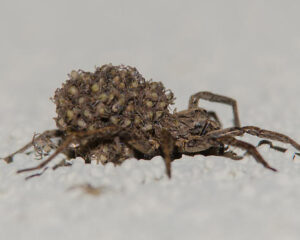
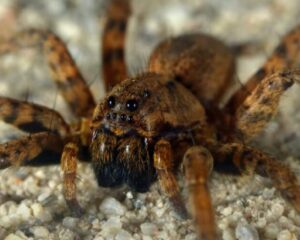
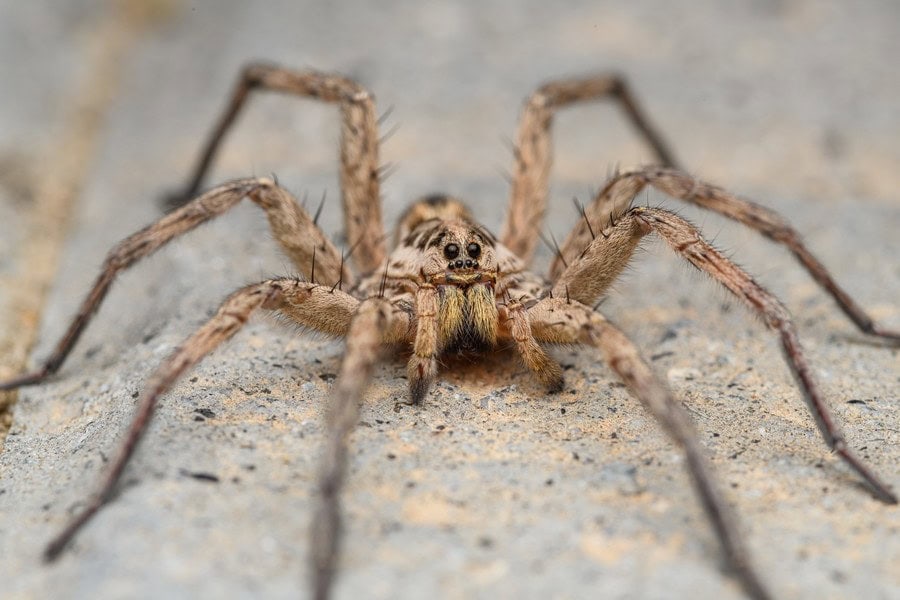
Unlike web-builders, wolf spiders actively hunt. They rely on speed, camouflage, and excellent eyesight (notice the characteristic forward-facing eye rows) to ambush or chase down insects. A notable behavioral trait: females carry egg sacs attached to their spinnerets and, after hatching, spiderlings often ride on the mother’s back — a maternal strategy that boosts early survival. These life-history traits influence how wolf spiders use patchy, seasonally-dynamic habitats such as cranberry bogs.
Cranberry Bogs: A Unique Agroecosystem
What Is a Cranberry Bog?
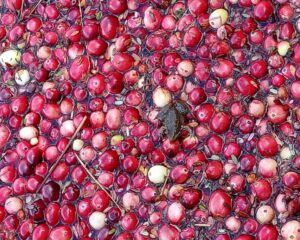
Cranberry bogs are engineered wetlands: low-lying fields in acidic peat or sand substrates, often crisscrossed by dikes and channels for water management. Growers flood beds at key times (to protect plants, suppress weeds, and during harvest) and manage vegetation structure carefully. This mosaic of wet and drier microzones — dikes, hummocks, sedge fringes, and furrows — creates a variety of niches for arthropods.
Seasonal Rhythms: Flooding, Growth, and Harvest
Timing matters. Bogs are dynamic — spring growth, summer pest peaks, fall harvest floods — and many arthropods respond to these rhythms. Wolf spiders exploit edges and raised areas during floods and retreat to shelter when water covers the beds. Their seasonal activity often overlaps with pest outbreaks, setting the stage for predator–prey interactions that growers may value.
Why Wolf Spiders Thrive in Bogs
Microhabitats and Shelter
Wolf spiders prefer ground-level habitats where they can stalk prey. In cranberry beds they use dikes, plant litter, and clumps of sedge for cover and hunting platforms. These microhabitats also provide refuge during harvest floods: spiders may move to higher ground or aggregations near dike edges.
Raised dikes, sedge mats, and leaf litter
Small-scale topography — the raised rails, plant islands, and marginal grasses — is crucial. These “islands” maintain arthropod populations during flooding and supply prey for predators like wolf spiders. Maintaining vegetated edges and coarse plant litter can therefore sustain spider populations season-to-season.
Prey Availability: The Bog Food Web
Cranberry bogs harbor a diversity of insect taxa: small beetles, hemipterans (like leafhoppers), aphids, and moth larvae among them. Wolf spiders are opportunistic generalists and will take a range of prey items they can overpower — which means they can reduce numbers of small, mobile pests under some conditions.
Ecological Benefits: Natural Pest Control
Which Cranberry Pests Do Spiders Eat?
Observational reports and grower anecdotes credit spiders with preying on aphids, small beetles, and other soft-bodied arthropods that might otherwise damage plants. However, quantitative evidence varies by site and pest type: while spiders consume many small insects, some important cranberry pests (e.g., certain weevils or larger caterpillars) are less frequently captured. This means spiders are part of a diverse natural-enemy complex, not necessarily a one-stop solution.
Evidence: What Studies and Growers Say
Field studies in cranberry systems show mixed results. Some research and extension literature emphasize spiders as beneficial generalist predators that can suppress small pest insects; other studies suggest spiders only occasionally capture certain economically important pests. The empirical takeaway: spiders are valuable contributors to biodiversity-based control, but their impact depends on local species composition, timing, and management.
Integrated Pest Management (IPM) and Spiders
How Growers Encourage Beneficial Spiders
Growers who practice IPM often adopt habitat-based strategies: maintain vegetated margins, reduce non-target insecticide use during times when spiders are active, and retain structural complexity in and around beds. These measures allow spider populations to persist and provide top-down suppression of pest outbreaks. Regional IPM guides list spiders among the natural enemies growers should consider in a diversified management plan.
Practical strategies: reduced sprays, habitat edges, monitoring
Simple actions help: delay broad-spectrum sprays where feasible, protect refuge areas on bog margins, and time insecticide applications to minimize effects on beneficials. Recording predator abundance during the season helps growers judge whether natural control is keeping pests in check.
The Human Angle: Are Wolf Spiders Dangerous?
Bites, Symptoms, and Medical Relevance
Short answer: wolf spiders are not medically significant for most people. They will bite if trapped or provoked, and bites can cause localized pain, swelling, or redness — similar to many insect bites. Serious systemic reactions are rare. For the biomedical facts and bite guidance, consult trusted extension resources, but growers and field workers should use sensible protective clothing and first-aid: clean the site, manage swelling, and seek care if severe symptoms or allergy occur.
Research Gaps and What We Still Don’t Know
Open questions remain: Which spider species or assemblages are most effective against specific cranberry pests? How do flooding regimes alter predator–prey dynamics over multiple seasons? And how do sublethal pesticide effects change predator behavior and hunting efficiency? Targeted experiments and long-term monitoring would help convert promising anecdotes into actionable IPM advice.
Practical Tips for Biologists and Growers (Monitoring & Conservation)
Sampling methods: pitfall traps, sweeps, visual counts
If you want to measure spider abundance and community composition, use a combination of pitfall traps (for ground-active spiders), sweep netting (for vegetation-associated species), and timed visual searches along dikes. Combine methods for a fuller picture and repeat sampling across seasons.
Conservation-friendly practices
To nurture spider-mediated control: keep field margins vegetated, avoid unnecessary broad-spectrum insecticides, and consider “refuge” strips that provide overwintering habitat. Small investments in habitat complexity often pay dividends in natural-enemy services and long-term resilience of the agroecosystem.
Conclusion
In cranberry agroecosystems, wolf spiders are more friend than foe. Their hunting behavior, maternal investment, and generalist diets make them effective members of a natural-enemy guild that can help reduce pest pressure — though their role is context-dependent and should be integrated into broader IPM plans rather than seen as a silver bullet. For ecologists and growers alike, the key is observation, habitat stewardship, and a nuanced appreciation for how even the humblest ground hunter contributes to crop health.
FAQs
Q1: Do wolf spiders reduce major cranberry pests enough to skip insecticides?
A1: Not usually on their own. They help reduce populations of small, mobile pests but are one tool within IPM; decisions should be data-driven and local.
Q2: Are wolf spiders common on all cranberry farms?
A2: Many farms host wolf spiders, especially where there’s habitat complexity (dikes, vegetated margins); abundance varies with local management.
Q3: How can I monitor spider populations cheaply?
A3: Pitfall traps, timed visual surveys along dikes, and simple sweep netting are cost-effective. Combining methods yields the best picture.
Q4: Should workers be worried about spider bites during harvest?
A4: Bites are possible but rarely severe. Protective clothing and careful harvesting technique reduce encounters; treat bites as minor wounds unless allergic symptoms appear.
Q5: Where can I read more peer-reviewed work on spiders in cranberry bogs?
A5: Search journals like the Journal of Arachnology for field studies on spiders and their prey in cranberry systems; extension publications also summarize practical findings.
-
Unlock the truth about cranberry bog spiders—from their surprising size to their unique wetland homes. 🕷️🍒
-
Discover fascinating facts that bust myths and reveal why these bog-dwellers are more intriguing than scary!