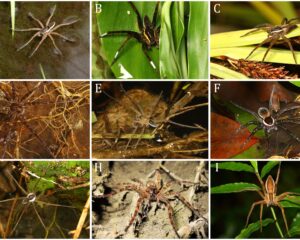
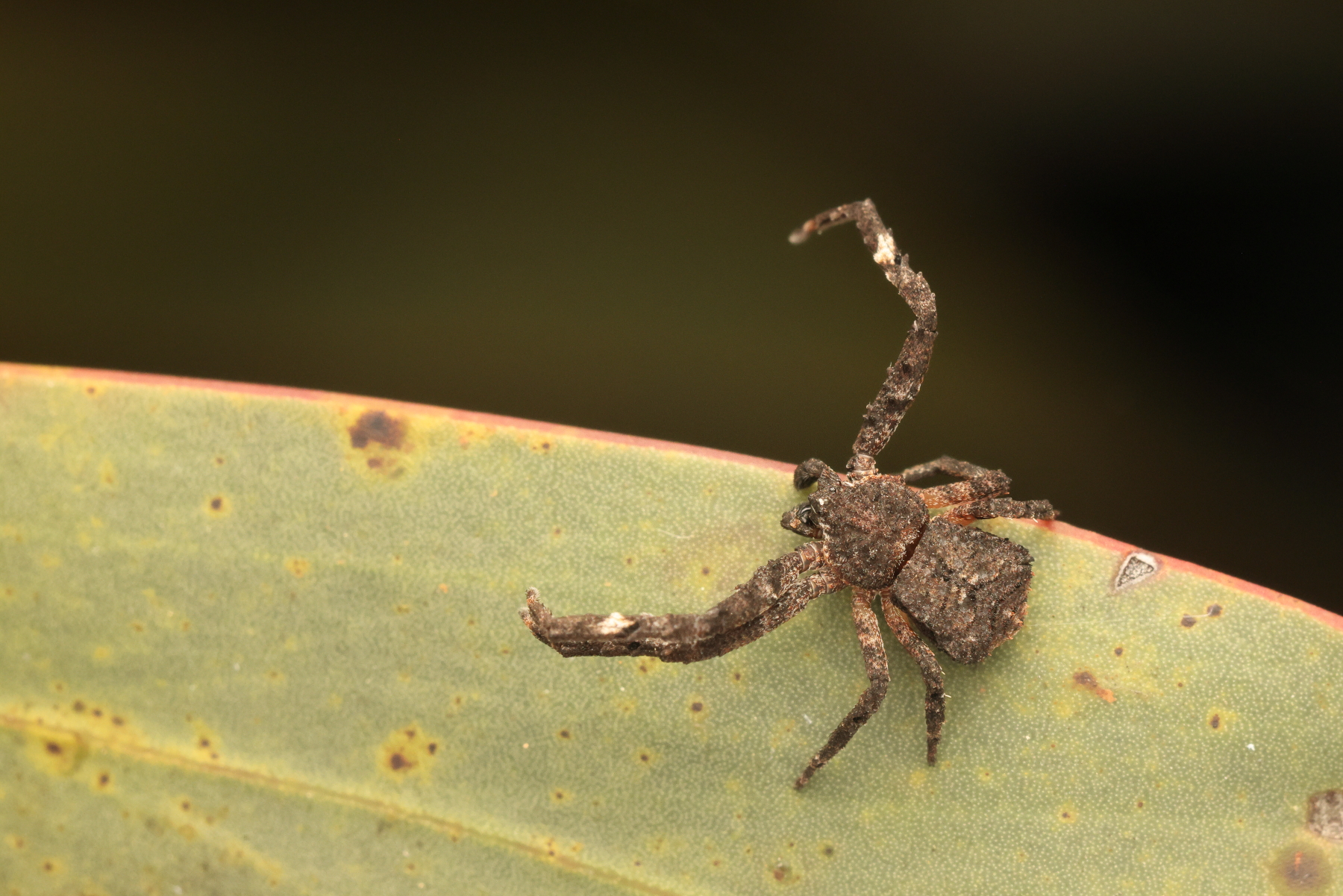
Introduction to cranberry bog spiders
Have you ever wandered past a cranberry marsh and noticed tiny eight-legged silhouettes darting across soggy plant stems? Those little hunters are often lumped together under the friendly (if spooky) name cranberry bog spiders — a catch-all for spiders that make their living in acidic, waterlogged peatlands and cranberry beds. They’re not a single species, but they share the same dramatic stage: wetlands. In this article we’ll explore who they are, how they’re built for life on squishy ground, why farmers sometimes love them, and what their presence tells us about bog health.
Quick guide: I use the term cranberry bog spiders as a habitat label — the phrase covers several spider types commonly found in and around cranberry marshes (wolf spiders, orb-weavers, jumping spiders, and others).
Habitat & Distribution
Spiders that hang out in cranberry bogs favor places where the soil stays wet and cool, where Sphagnum moss and low shrubs hold water like a sponge. These environments are common in northern temperate regions and in areas where cranberries (the plant) naturally or artificially dominate the landscape. Research has shown that wild and abandoned cranberry stands can harbor surprisingly rich spider communities — often more so than intensively managed fields.
What is a cranberry bog?
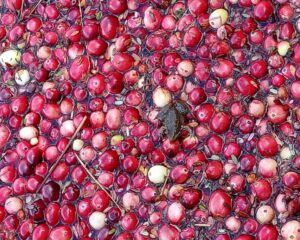
A cranberry bog is a wetland habitat characterized by peat and Sphagnum moss, acidic water, and a mat of low-lying cranberry vines (or other wetland plants in wild stands). Some bogs are natural ecosystems; others are managed for commercial cranberry production and are periodically flooded for harvest. The combination of standing water, dense vegetation and abundant insect life makes bogs attractive hunting grounds for spiders.
Where do they live (natural vs managed bogs)?
In unmanaged bogs, spiders can colonize the understory and moss layers undisturbed, building webs or hunting by wandering. Managed cranberry beds are more dynamic — flooding, mowing, and pesticide use change which spiders survive. Studies looking at wild vs managed beds suggest that spider abundance and species composition shift a lot depending on how often the bog is disturbed.
Taxonomy & Species Overview
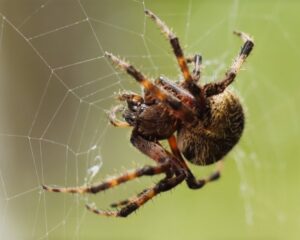
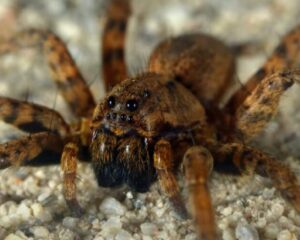
The phrase “bog spider” isn’t a formal taxonomic category — it’s ecological shorthand. In cranberry bogs you might encounter members of several families: wolf spiders (Lycosidae), orb-weavers (Araneidae), jumping spiders (Salticidae), and nursery-web spiders (Pisauridae), among others. Local species vary by region, but the pattern repeats: a mix of hunting spiders and web builders adapted to wetland life.
Common species found in cranberry bogs
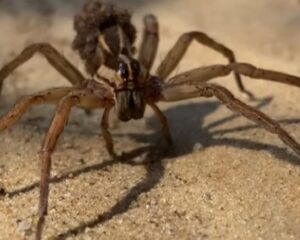
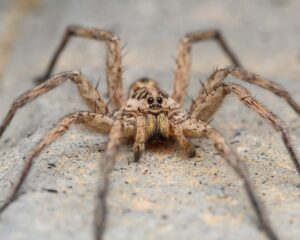
- Wolf spiders: Active, ground-running hunters that often dominate bog floors.
- Orb-weavers: Build small webs among stems and shrubs.
- Jumping spiders: Tiny visual predators that stalk prey on leaves and moss.
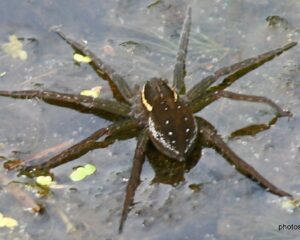
- Nursery-web spiders: Sometimes near water edges, with maternal care behaviors.
Field guides and regional reports consistently list wolf spiders and orb-weavers among the most visible bog inhabitants.
Identification markers
Look for body shape and behavior: wolf spiders are stocky with good eyesight and long legs; orb-weavers are often rounder and seen in webs; jumping spiders are compact with distinctive eyes. Coloration tends toward browns and mottled greys — great camouflage against peat and plant stems.
Physical Adaptations for Wetlands
How do these spiders avoid becoming dinner for the bog itself? Wetland spiders possess several nifty adaptations: lightweight bodies that help them avoid breaking surface tension, water-repellent hairs that trap air, and behavioral tricks like moving to higher stems when water rises. These features let them walk, swim briefly, or simply stay dry during the seasonal floods used in cranberry harvests.
Surface locomotion and anti-drowning traits
Some wolf spiders can scamper over wet surfaces without sinking — think of them as tiny water-skaters with legs optimized to distribute weight. If a borrow of water overtakes their patch, many species simply climb plant stems or cling to floating debris until the water recedes.
Camouflage & coloration
Their mottled colors are no accident: peat, dead leaves and moss provide a cryptic background. Camouflage helps spiders ambush prey and avoid predators (birds and amphibians that patrol bog edges).
Behavior & Feeding Ecology
Cranberry bog spiders use a mix of hunting strategies. Some are sit-and-wait ambushers, others actively wander in search of small beetles, flies, and moth larvae. Their diets often include the very insects that can damage cranberry plants, so spiders function as natural pest suppressors in many bog ecosystems.
Hunting strategies in bog environments
- Wandering hunters (wolf spiders): Move along moss mats and vine runners, chasing or pouncing on prey.
- Web builders (orb-weavers): Construct small snag webs between stems to catch flying insects.
- Visual hunters (jumping spiders): Use excellent eyesight to stalk and leap on prey.
Diet & prey selection
Common prey includes mosquitoes, small flies, beetle larvae (including cutworms and fruit-feeding moth larvae), and tiny craneflies. In unmanaged bogs, a diverse insect community supports a robust spider assemblage, which in turn limits outbreak potential for some crop pests.
Reproduction & Life Cycle
Spider life cycles in bogs are often tuned to seasonal rhythms. Eggs are laid in silk sacs, juveniles hatch and molt through several stages, and many species time reproduction so that young stages hatch when insect prey is plentiful.
Egg sacs and maternal care
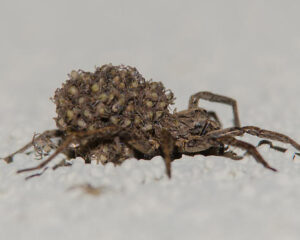
Some bog spiders (notably certain wolf and nursery-web spiders) show maternal behaviors: carrying egg sacs under the abdomen or guarding nursery webs until spiderlings disperse. These behaviors increase offspring survival in a habitat that can quickly flip between dry and flooded.
Seasonal cycles & diapause
Winter and flooding periods push many species into a sort of dormancy or slowed development. Timing is everything: if spiderlings hatch too early, floods can wipe them out; too late, and they miss insect peaks.
Role in Cranberry Bog Ecosystems
Cranberry bog spiders are more than creepy decorations — they are active players in wetland food webs. By feeding on pest insects they provide an ecosystem service to farmers and wild bogs alike. In addition, their presence and abundance can signal how disturbed or healthy a bog is: fewer spiders often means heavy pesticide use or frequent mechanical disturbance.
Predator-prey interactions
Spiders limit local insect populations at a micro scale. In balanced bogs, spiders and predatory insects keep herbivore numbers in check, lowering the chance of pest outbreaks that could harm cranberry yields.
Indicator species for bog health
Because spiders react to disturbance, researchers sometimes use spider surveys to assess bog integrity. A rich, diverse spider fauna typically points to a less disturbed, more structurally complex habitat.
Interactions with Humans & Agriculture
Farmers harvesting cranberries are well aware that spiders are part of the bogscape. During flood harvesting, many spiders climb to higher stalks or bushes and avoid the floating berries; most end up unharmed and off the crop. Some growers even view spiders as allies against insect pests.
Impact on cranberry farming & harvesting
In commercial bogs the picture is complex: low-impact practices tend to support spider populations that help naturally control pests. Conversely, frequent pesticide use or aggressive mechanical management reduces spider abundance and can make pest problems worse in the long term.
Conservation & management
Balancing production and biodiversity means using integrated pest management (IPM) approaches: limit broad-spectrum insecticides, maintain refuge strips, and time disturbances to minimize harm to beneficial predators like spiders.
Research Methods & Observation Tips
If you’re a student or citizen scientist curious about cranberry bog spiders, there are ethical ways to observe them. Researchers typically use pitfall traps for ground-active species, visual sweep-netting for low vegetation, and timed counts to estimate abundance. Always get permission to sample on private or managed bogs.
Field survey techniques
- Pitfall trapping: Good for wandering hunters — check traps frequently.
- Sweep netting: Useful for spiders on cranberry vines and low shrubs.
- Visual timed searches: Scan moss mats and stems during morning or evening activity peaks.
Ethical considerations
Avoid sampling in fragile moss patches and minimize removal of individuals. Bog habitats can be easily damaged by trampling.
Conservation Concerns & Threats
Cranberry bog spiders face threats shared by many wetland organisms: habitat destruction, peat extraction, conversion to agriculture, and water-management changes. Climate change — altering precipitation patterns and freeze cycles — adds a slow-moving stress that may shift spider phenology and prey availability.
Habitat loss & peat extraction
Draining or mining peatlands destroys the microhabitats spiders depend on. Protecting intact bogs and restoring degraded ones helps spider communities bounce back.
Climate change impacts
Shifts in flooding timing or more extreme droughts will change insect availability and could decouple spider life cycles from prey peaks, with unknown ecosystem consequences.
How to Photograph & Document Them (Citizen Scientists)
Use a macro lens or phone macro clip, steady hands, and lower angles to capture spiders at eye level. Photograph habitat context (moss, vines, water) and take several shots: a close-up of the body, an overview of the perch, and a scale object (a coin or ruler). Record date, time, and GPS if possible — every observation helps science.
Interesting Case Studies & Anecdotes
Researchers studying Massachusetts cranberry bogs reported robust spider communities on wild and abandoned stands, underscoring how disturbance reduces predator communities on managed beds. Farmers harvesting cranberries often notice spiders fleeing to higher vegetation — a behavior that keeps most spiders out of the product and highlights their resilience.
Conclusion
Cranberry bog spiders are small but mighty actors in wetland ecosystems. They showcase how life adapts to watery, acidic places and how predators can quietly support agricultural systems by keeping pests down. Whether you’re an ecologist, a farmer, or a curious nature lover, watching these spiders is a reminder that even the soggiest corners of the world are full of clever solutions and hidden stories — and they deserve study and protection.
FAQs
Q1: Are cranberry bog spiders dangerous to people?
A1: No — most spiders found in bogs (wolf spiders, orb-weavers, jumping spiders) are harmless to humans. Bites are rare and typically mild.
Q2: Do spiders end up in the harvested cranberries?
A2: During flood harvest, spiders usually climb to higher vegetation or cling to stems; farmers and processors have sorting steps, and accidental discoveries in packaged fruit are extremely rare.
Q3: Can spiders reduce pest problems in cranberry bogs?
A3: Yes — spiders are natural predators of several cranberry pests and can help reduce pest pressure, especially in less intensively managed bogs.
Q4: How can I observe bog spiders without damaging the bog?
A4: Stick to boardwalks or firm ground, avoid trampling moss, use visual surveys instead of heavy sampling, and always get permission for fieldwork.
Q5: Where can I learn more or report sightings?
A5: Local naturalist groups, university extension offices, and citizen-science platforms (e.g., iNaturalist) are good places to share photos and get help with IDs.
- Discover the fascinating world of cranberry bog spiders and their vital role in wetland ecosystems.
- Learn how these unique arachnids adapt, hunt, and thrive in their watery homes.