Introduction — Why a “cranberry bog spiders video” can change how you see wetlands Have you ever watched a short nature clip and suddenly seen an entire ecosystem in a new light? That’s what a well-shot cranberry bog spiders video does: it turns tiny, spindly hunters into characters with purpose, highlighting behaviors you might miss in a casual walk. For biologists, ecologists, and curious naturalists, videos from cranberry bogs are more than pretty footage — they’re data-rich windows into predator–prey dynamics, reproductive strategies, and the subtle ways life adapts to soggy, acidic habitats. In this article we’ll unpack the biology, behavior, filming tips, conservation relevance, and research value of these spiders — with practical takeaways for field observers and video-makers alike.
What Are Cranberry Bog Spiders?
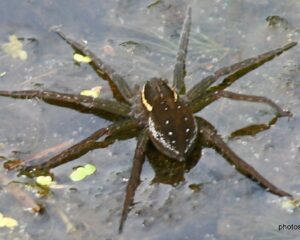
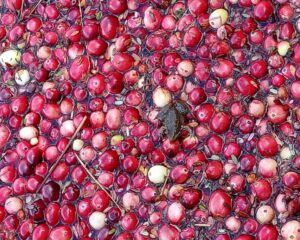
“Cranberry bog spider” isn’t a single species name; it’s a handy common label for the spiders you regularly meet in cranberry marshes and peat bogs — places with persistent moisture, low nutrients, and dense vegetation. These spiders are the bog’s small predators: some are ground-active hunters (think wolf-spider–like behavior), some are web-builders hiding in vegetation, and others are semi-aquatic, skimming the water surface like tiny boats. If you’re studying wetland arthropods, cranberries’ agricultural rows are surprisingly good study sites: they’re open, repeatable habitats where one can observe behavior repeatedly.
Taxonomy and Common Species Found in Bogs
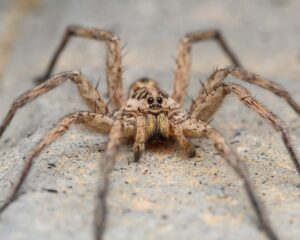
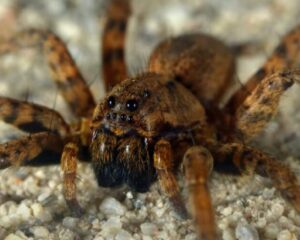
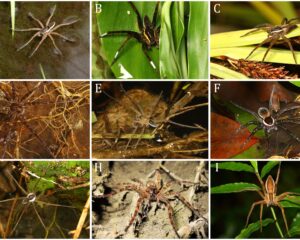
Most bog-dwelling spiders belong to a handful of families familiar to arachnologists: Lycosidae (wolf spiders), Pisauridae (nursery-web and fishing spiders, including Dolomedes), Linyphiidae (sheet-weavers), and sometimes Araneidae (orb-weavers) that take advantage of nearby shrubs. Which exact species you’ll find depends on region and local climate, but the important point is functional diversity — wandering predators, sit-and-wait ambushers, and web-builders all coexist and partition the bog’s insect prey.
Habitat — The Cranberry Bog Ecosystem
Cranberry bogs are engineered yet semi-natural wetlands: shallow water, peat or muck substrate, sedges and sphagnum moss patches, plus cranberry vines and periodic flooding. These conditions favor arthropods adapted to moisture and temperature swings. Spiders exploit microhabitats — under vine mats, along ditches, on emergent stems — and their presence tracks subtle habitat variation. Think of a bog like a tiny city with neighborhoods; spiders live on roofs (vegetation), alleys (between vines), and ground floors (soil and peat), each spot offering different prey and shelter.
Why Study Them? Ecological Importance
You might shrug at a single spider, but stack hundreds across a bog and suddenly you have a mesh of predation pressure shaping insect communities. Spiders help control herbivorous insects, some of which damage cranberries or vector disease. They also act as prey for birds, amphibians, and larger arthropods — linking trophic levels. From an ecological-monitoring standpoint, spider assemblages are sensitive to pesticide use, water management, and vegetation change, making them practical bioindicators for wetland health.
Role as Predators and Pest Controllers
Many bog spiders are generalist predators — they’ll eat flies, aphids, thrips, small beetles, and sometimes even other spiders. Because they’re efficient hunters and abundant, they contribute to keeping herbivore populations in check, complementing other natural enemies. For integrated pest management in cranberry farming, encouraging a healthy spider community can reduce reliance on chemicals.
Indicator Species for Bog Health
Changes in species composition or sudden drops in spider numbers often point to broader ecological shifts: contamination, drying events, or vegetation loss. Long-term video records and standardized surveys can detect these trends early. So when you compile cranberry bog spiders video clips over seasons, you’re building an ecological time-lapse with conservation value.
Anatomy and Behavior
Spiders show fascinating morphological and behavioral tweaks for life in wet places. Let’s look at the features and the tactics that make them successful bog residents.
Size, Coloration, and Hydrophobic Adaptations
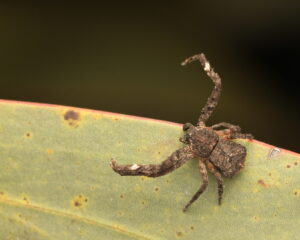
Bog spiders range from a few millimeters to several centimeters in body length, with leg spans that amplify apparent size. Coloration tends to be cryptic: browns, tans, and mottled patterns that blend with peat, stems, and leaf litter. Some semi-aquatic spiders have hydrophobic hairs on legs and abdomen that trap a thin air layer — this keeps them buoyant and dry while moving across splashy surfaces. It’s similar to wearing micro-rafts made of hairs.
How legs and cuticle cope with wet surfaces
The leg microstructure repels water and helps grip when walking on wet stems or the water surface. Observing these movements on slow-motion video reveals subtle mechanics: toes flick, claws anchor, and the spider uses its body as a flexible ballast to avoid slipping.
Hunting Strategies — Ambush vs. Pursuit
Some spiders are patient sit-and-wait predators, camouflaged on a blade of grass waiting for prey to pass. Others are active chasers that sprint across open peat after prey. Videos often reveal hybrid strategies: a quick sprint followed by a sudden pounce, or a brief stalk that ends in a precise strike. Watching many such sequences helps distinguish species-specific tactics.
Life Cycle and Reproduction
Understanding the life cycle helps interpret seasonal footage. For many bog species, timing is everything.
Egg Sacs, Maternal Care, and Nursery Behavior
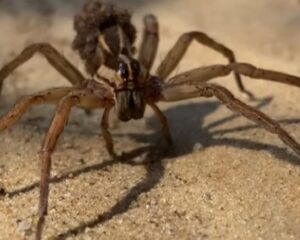
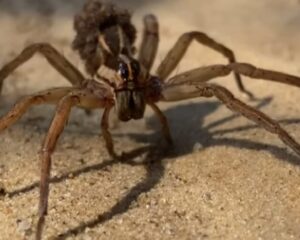
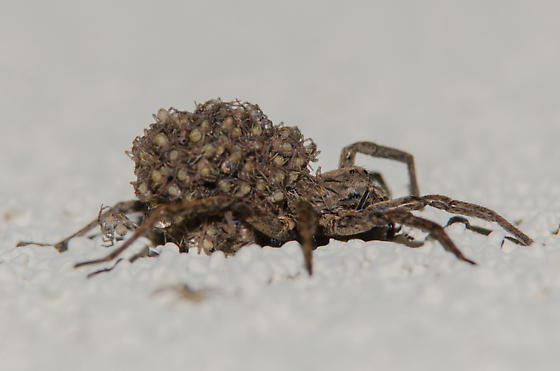
Some families show intensive maternal care: wolf spiders (Lycosidae) famously carry egg sacs affixed to their spinnerets and later ferry spiderlings on their backs. Nursery-web spiders (Pisauridae) create a protected silk “nursery” for their young. Video captures of these behaviors are gold for ethologists because they show timing, defense behaviors, and how mothers interact with surrounding habitat.
Seasonal Activity Patterns
Most temperate bog spiders mature and reproduce in warmer months. Juveniles may balloon — using silk to catch wind and disperse — and adults often peak in late spring to early fall. If you compile cranberry bog spiders video across months, you’ll notice shifts: mating dances in summer, egg-carrying mothers in late summer, and fewer active hunters as temperatures drop.
Interactions with Other Species
Spiders are knotted into food webs. Cameras capture more than the spider — they show the cast it interacts with.
Predators, Parasites, and Prey Types
Predators include birds, frogs, and larger arthropods. Parasitoid wasps and nematodes sometimes target spider eggs or juveniles. Prey spans small dipterans (flies), hemipterans (true bugs), moth larvae, and other invertebrates typical of bog microfauna. Noting prey in video clips helps infer the spider’s ecological niche.
Observing Cranberry Bog Spiders: Field Tips
Want to collect useful footage or just observe ethically? A few field-smart habits go a long way.
Best Times and Ethical Guidelines
Dawn and dusk are often the liveliest times. Walk quietly, use low-impact paths, and avoid trampling vegetation. If you film, minimize light/heat from lamps and avoid manipulating animals unless for a licensed study. Respect private property and, if on farmland, coordinate with growers. Remember: your footage is a scientific record — keep disturbance to a minimum.
Cranberry Bog Spiders Video: What to Look For
This is the practical heart for both researchers and enthusiasts. When you watch or shoot a cranberry bog spiders video, prioritize behavior, context, and repeatability.
Key Behaviors to Watch in Footage
- Hunting sequence: notice approach angle, stalking posture, and the final strike.
- Egg/juvenile interactions: maternal defense and spiderling dispersal.
- Movement on water and stems: gait adjustments, slip recovery.
- Mating displays: courtship vibratory signals and physical gestures.
Each clip that captures these can answer different biological questions — from biomechanics to mating systems.
How to Film Them — Practical Camera Tips
Want shareable, analyzable footage? Try these:
- Use a macro lens or close-focus setting; keep a small working distance.
- Shoot at 60 fps (or higher) for action; slow-motion reveals leg kinematics.
- Stabilize with a small tripod or beanbag; bogs are bouncy!
- Prioritize natural light; diffuse harsh sun with a white cloth or shoot during golden hour.
- Record context: include nearby plants and a ruler or coin for scale. Metadata (date, time, location) is crucial if your video is used for research or citizen science.
Case Studies: What Notable Videos Reveal
You don’t need a lab to learn from footage — just careful observation. Below are the kinds of revelations well-made videos produce.
Hunting Sequence Breakdowns
A single high-frame-rate clip can show how a spider times its leap to a moving fly, how leg angles change during acceleration, and how silk may be used to anchor or slow descend. Repeated clips let you quantify strike success and preferred attack angles.
Mating and Maternal Care in Close-up
Close-up footage often reveals subtle courtship touches or how mothers barricade their nursery silk from predators. These behavioral micro-scenes are hard to catch without video.
Conservation Concerns & Threats
Cranberry bogs are working landscapes; management choices matter. Spiders face multiple pressures.
Habitat Loss, Chemicals, and Climate Effects
Drainage, peat extraction, and agricultural intensification alter microhabitats. Pesticide drift and runoff reduce prey base and can cause direct mortality. Warming and altered water regimes shift species composition. Video records showing declining activity across years can be a red flag prompting management changes.
Conservation Actions and Habitat Management
Maintain buffer zones, reduce chemical inputs, and preserve wet microrefugia. Encourage growers to adopt integrated pest management and to recognize the value of predatory arthropods. Videos and photos documenting spider presence are persuasive tools for outreach.
Citizen Science & How You Can Help
You don’t need to be a professional to contribute. Uploading time-stamped videos to platforms like iNaturalist or local biodiversity hubs helps build occurrence records. Include location, habitat notes, and any observed behavior. A steady stream of cranberry bog spiders video clips adds resolution to our understanding of wetland arthropod dynamics.
Practical Applications: Research and Education
Teachers can use short clips to teach predator–prey dynamics, biomechanics, or conservation. Researchers can extract quantitative data (strike speed, maternal defense frequency) from calibrated video. For applied ecology, footage helps evaluate management impacts on predator communities.
Conclusion
Spiders in cranberry bogs are small but mighty actors in wetland food webs. A good cranberry bog spiders video is more than eye candy — it’s an observational tool that captures behavior, reveals ecological interactions, and helps monitor habitat health. Whether you’re a biologist, an ecology student, or a hobbyist with a macro lens, filming and sharing ethically collected footage amplifies our collective knowledge. So next time you’re near a bog, point a camera at that tiny hunter — you might catch a four-legged scene that changes how we think about wetlands.
FAQs
- Q1: What camera settings capture spider behavior best?
- A: Aim for a macro-capable lens, 60 fps or higher for action, a small aperture for depth of field (f/5.6–f/11), and steady support (tripod or beanbag). Natural, diffused light works best. Include a scale object in frame.
- Q2: Can videos help identify spider species?
- A: Yes — good-quality footage showing body patterning, eye arrangement (if visible), and behavior can narrow IDs. Still photos of morphological features (spinnerets, abdomen patterns) combined with video are even better.
- Q3: Are cranberry bog spiders dangerous to people?
- A: Almost never. Most bog species are small, shy, and non-aggressive. Bites are rare and usually harmless. Still, respect wildlife and avoid handling.
- Q4: How can I contribute my videos to science?
- A: Upload to citizen-science platforms, tag location/time, and add habitat notes. Contact local universities or extension services if you think you’ve captured rare or important behavior.
- Q5: What signs in video footage indicate environmental stress?
- A: Low spider abundance across repeated visits, reduced hunting activity, or the sudden presence of dead arthropods can indicate chemical exposure or habitat degradation. Pair video observations with simple notes on vegetation, water level, and recent management activities.
Discover the mysterious world of cranberry bog spiders in this fascinating video guide. A must-watch for biology and ecology enthusiasts!